How to Build a Profitable AI SaaS Using No-Code Tools
Want to earn a steady stream of passive income without writing a single line of code? In this step‑by‑step guide we’ll show you how to build AI SaaS no‑code and turn a simple idea into a revenue‑generating product. The process works for anyone aged 20‑45 who’s looking for extra cash, a side hustle, or a path out of the 9‑to‑5 grind.
Why No‑Code AI SaaS Is a Smart Choice for Digital Entrepreneurs
Traditional software development demands months of coding, a team of engineers, and a hefty budget. No‑code platforms have collapsed those barriers. Today you can:
- Validate a market idea in days instead of months.
- Launch a fully functional AI‑driven service with drag‑and‑drop builders.
- Scale automatically with cloud‑based AI APIs.
- Keep overhead low, maximizing profit margins.
These advantages make AI SaaS an ideal addition to any digital entrepreneur’s portfolio, alongside affiliate marketing, dropshipping, YouTube channels, digital products, Etsy shops, and freelancing services.
Step‑by‑Step Blueprint to Build AI SaaS No‑Code
- Identify a Niche Problem – Look for repetitive tasks that can be automated with AI. Examples include content summarization for bloggers, image background removal for Etsy sellers, or lead qualification for affiliate marketers.
- Validate the Idea – Create a simple landing page (using Carrd or Webflow) and run a small ad campaign. Collect email sign‑ups and gauge interest before you invest any money.
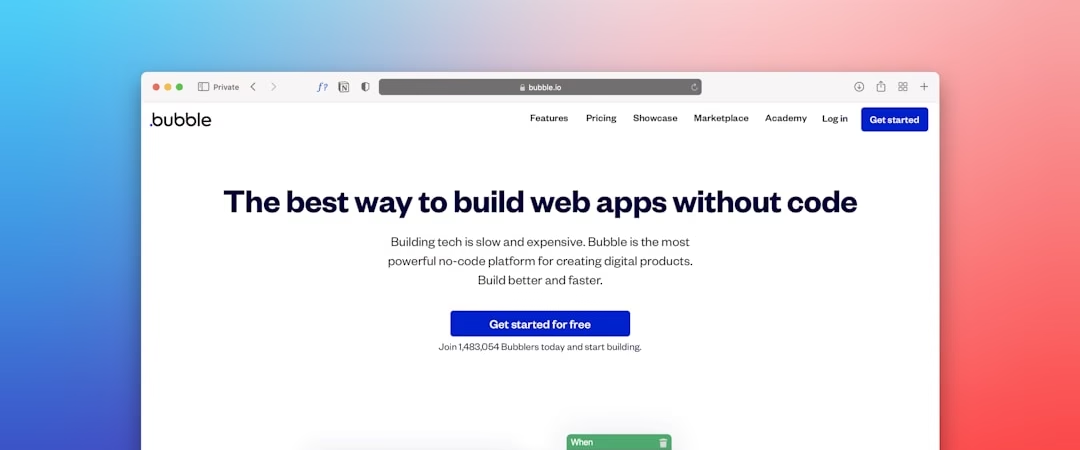
- Select the Right No‑Code Platform – Popular choices are Bubble, Softr, and Adalo. They all integrate with AI APIs like OpenAI, Cohere, or Hugging Face.
- Connect an AI API – Sign up for an API key, set usage limits, and add the endpoint to your no‑code workflow. Most platforms let you map inputs (e.g., a text box) to API calls with a visual “connector”.
- Design the User Interface – Keep it minimal. A clean dashboard, a single input field, and a results pane are often enough for a SaaS MVP.
- Set Up Payment Processing – Use Stripe or Paddle integrations to collect recurring subscriptions. Offer a free trial to lower the barrier to entry.
- Test, Iterate, and Launch – Run beta tests with your email list. Fix bugs, improve response speed, and add a FAQ based on real user questions.
- Market Your Service – Leverage content marketing, YouTube tutorials, and affiliate partnerships. Highlight the AI advantage and the no‑code simplicity.
- Monitor Metrics – Track churn, MRR (monthly recurring revenue), and API usage to keep costs under control and profits growing.
Follow these nine steps and you’ll have a market‑ready AI SaaS product in under a month.
Common Mistakes to Avoid When Building AI SaaS No‑Code
Even with a solid roadmap, many first‑time creators stumble on the same pitfalls. Recognizing them early saves time and money.
- Choosing the Wrong AI Model – Not every model fits every task. A large language model may be overkill for simple keyword extraction, inflating costs.
- Neglecting Data Privacy – If you handle user data, ensure GDPR and CCPA compliance. Missing this can lead to legal trouble.
- Overcomplicating the UI – Users want speed, not a maze of options. Keep the interface intuitive.
- Setting Prices Too Low – Low pricing can attract “price‑shoppers” who churn quickly. Research competitors and price for value.
- Skipping the Beta Phase – Launching without real‑world feedback often results in a product that misses core user needs.
How much does it cost to build an AI SaaS with no-code?
Initial costs can range from $50‑$200 per month for platform subscriptions, plus API usage fees (usually $0.001‑$0.02 per token). A modest MVP can be launched for under $300 total, making it accessible for side‑hustle budgets.
What no‑code platforms support AI integrations?
Bubble, Softr, Adalo, and Webflow (via Zapier or Integromat) all offer native or plug‑in support for OpenAI, Cohere, and other AI services. Choose based on your preferred UI builder and pricing model.
Can I scale my AI SaaS without hiring developers?
Yes. As user volume grows, you can upgrade your no‑code plan and switch to higher‑tier AI API packages. The architecture remains the same; you’re simply buying more capacity.
Is a subscription model the best way to monetize?
For most SaaS products, recurring revenue provides stability. Offer tiered plans (e.g., Basic, Pro, Enterprise) to capture a broader audience and increase average revenue per user (ARPU).
How do I protect my AI SaaS from copycats?
While the underlying AI models are publicly available, you can protect your brand with trademarks, and your unique UI/UX and workflow become a competitive moat. Additionally, keep your API keys secret and monitor for unauthorized usage.
Integrating AI SaaS Into a Broader Digital Income Strategy
Building an AI SaaS no‑code is just one piece of a diversified online income portfolio. Here’s how it fits with other proven methods:
- Affiliate Marketing – Promote complementary tools (e.g., SEO plugins) within your SaaS dashboard and earn commissions.
- Dropshipping – Use AI to generate product descriptions or customer support chatbots for your store.
- YouTube – Create tutorial videos that drive traffic to your SaaS landing page.
- Digital Products – Bundle your SaaS with e‑books or templates for a higher‑ticket offer.
- Etsy – Offer AI‑enhanced design services (like background removal) as a value‑add for sellers.
- Freelancing – Use your SaaS internally to improve efficiency and increase billable hours.
By cross‑promoting these channels, you create multiple touchpoints for customers and boost overall earnings.
What are the best AI use cases for a side hustle?
Content generation, image editing, data classification, and chatbot automation are high‑demand areas that monetize quickly. Choose a use case that aligns with your existing audience—whether they are bloggers, Etsy sellers, or affiliate marketers.
How long does it take to see the first $100 in revenue?
With a well‑targeted landing page and a modest ad spend ($50‑$100), many creators report their first $100 within 2‑4 weeks of launch, provided the product solves a real pain point.
Conclusion & Next Steps
Building an AI SaaS no‑code is a realistic and scalable way to generate passive income while leveraging the growing demand for AI automation. Follow the nine‑step blueprint, avoid the common pitfalls, and integrate your SaaS with other digital income streams for maximum impact.
If you’re ready to start, grab a free trial on Bubble, sign up for an OpenAI API key, and begin validating your idea today. The sooner you launch, the faster you’ll learn what your market truly wants.
Take action now: download our free checklist, join the community of AI SaaS builders, and turn your side hustle into a sustainable revenue source.