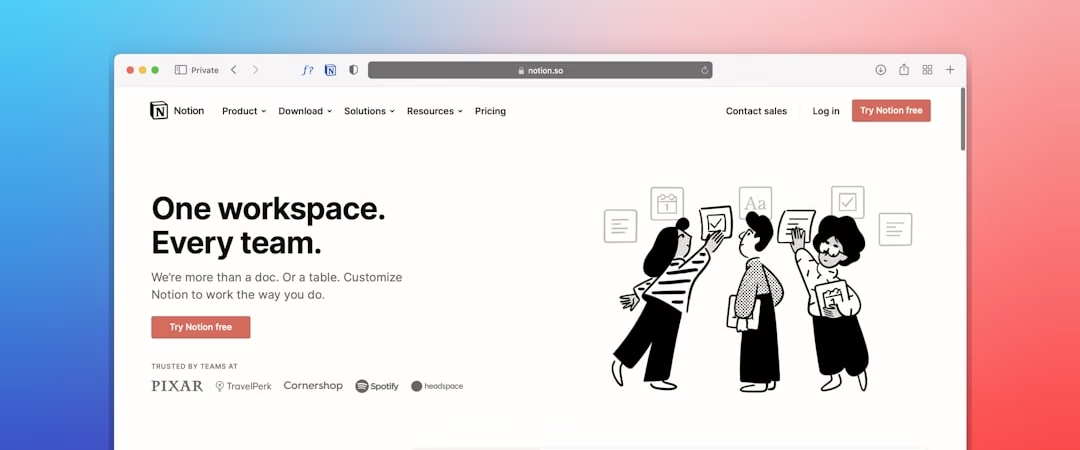
Mastering the Digital Marketplace: How to Sell Notion Templates Online in 2025
The digital economy is shifting from mass-produced software to hyper-personalized productivity systems. As more professionals seek organized ways to manage their lives, the demand for specialized workspace solutions has skyrocketed.
If you are looking for a sustainable way to build a side hustle or replace your full-time income, learning how to sell notion templates online offers a low-overhead, high-margin entry point into digital entrepreneurship.
Unlike dropshipping, which relies on physical logistics, or affiliate marketing, which requires massive traffic to see small commissions, digital products allow you to build an asset once and sell it infinitely.
This guide provides a realistic, no-nonsense roadmap for turning your organizational skills into a scalable business in 2025.
Why Notion is the Premier Platform for Digital Products
Notion has evolved from a simple note-taking app into a comprehensive “all-in-one” workspace. This versatility is exactly why it is the perfect vehicle for creators.
When you sell a Notion template, you aren’t just selling a file; you are selling a workflow, a system, and time saved.
People are willing to pay a premium for systems that solve specific problems, whether it is managing a small business, tracking fitness goals, or organizing a university semester.
The barrier to entry is low, but the ceiling for growth is incredibly high. You can start on a small scale and eventually build a brand that rivals established SaaS companies.
The Pros and Cons of Selling Notion Templates
Before you invest dozens of hours into building your first product, it is crucial to understand the economic reality of this niche.
The Advantages
- Zero Inventory Costs: Unlike physical products, your cost of goods sold (COGS) is virtually zero after the initial development time.
- Scalability: A template created once can be sold to ten people or ten thousand people without additional manufacturing effort.
- Low Technical Barrier: You don’t need to know how to code. If you can master Notion’s databases and relations, you can build a product.
- Passive Income Potential: Once your storefront is set up and your SEO is working, sales can occur while you sleep.
The Disadvantages
- High Competition: Because it is easy to start, the marketplace is becoming crowded with low-quality “aesthetic” templates.
- Intellectual Property Risks: It is difficult to prevent people from sharing your templates or attempting to replicate your unique logic.
- Platform Dependency: You are building on someone else’s ecosystem. If Notion changes its pricing or features, your product may need rebuilding.
- Marketing Intensity: Building the product is only 20% of the work. The other 80% is learning how to drive traffic to your store.
How to Successfully Sell Notion Templates Online: A 5-Step Framework
To move beyond “hobbyist” status and into professional digital entrepreneurship, follow this structured approach.
- Identify a High-Value Niche: Avoid making “General Life Organizers.” Instead, build a “Content Calendar for Real Estate Agents” or a “CRM for Freelance Designers.” Specificity wins in 2025.
- Master Advanced Notion Features: To charge premium prices, your templates must use advanced formulas, database relations, and automations. Basic checklists won’t command high prices.
- Select Your Sales Channel: Decide whether you will use a marketplace (like Etsy or Gumroad) or your own dedicated website (using Shopify or Lemon Squeezy).
- Build a Content Engine: Use platforms like TikTok, Pinterest, or YouTube to show your templates in action. Video demonstrations are the most effective way to convert viewers into buyers.
- Iterate Based on Feedback: Your first version won’t be perfect. Listen to your early adopters and refine the user experience constantly.
Is selling Notion templates a viable side hustle?
Yes, but with a caveat: it is a business, not a “get rich quick” scheme. If you treat it as a way to build a specialized product line, it can provide significant monthly recurring revenue.
Where is the best place to sell Notion templates?
For beginners, Gumroad and Etsy are the gold standards. Etsy provides built-in search traffic, while Gumroad offers better tools for email marketing and direct sales control.
How much can you make selling Notion templates?
Earnings vary wildly. Some creators make a few hundred dollars a month as a hobby, while top-tier creators earning $10,000+ per month focus heavily on niche B2B (Business to Business) solutions.
Comparison: Marketplace vs. Self-Hosted Storefronts
One of the most important decisions you will make is where to host your products. There is no single “right” answer, but there is a right answer for your current stage.
| Feature | Marketplaces (Etsy/AppSumo) | Self-Hosted (Gumroad/Shopify) |
|---|---|---|
| Traffic | Built-in audience; easier to find customers. | You must drive 100% of your own traffic. |
| Fees | High transaction and listing fees. | Lower fees, but higher marketing costs. |
| Customer Data | Limited access to customer emails. | Full ownership of your email list. |
| Branding | You look like every other seller. | Complete control over your brand identity. |
Recommendation: Start on Etsy or Gumroad to validate your idea. Once you have a proven product and an established audience, move to a self-hosted model to maximize your profit margins and build your email list.
Common Mistakes to Avoid When Selling Digital Products
Many creators fail within the first six months because they fall into these common traps.
Focusing on Aesthetics Over Utility
While a “pretty” template helps with initial clicks, it won’t prevent refunds. If your template looks beautiful but doesn’t actually help a user manage their tasks efficiently, you will struggle with bad reviews.
Ignoring SEO and Discoverability
You could build the greatest template in the world, but if no one can find it, you won’t make a cent. You must learn how to use long-tail keywords in your product titles and descriptions.
Neglecting the Customer Support Experience
Notion has a learning curve. If you don’t provide clear instructions, video tutorials, or a way for customers to ask questions, your reputation will suffer quickly.
Underpricing Your Expertise
Many beginners price their templates at $5 just to get sales. This is a race to the bottom. Instead, price based on the value provided. A system that saves a business owner 5 hours a week is worth much more than $5.
The Role of AI in Notion Template Creation
In 2025, you cannot ignore Artificial Intelligence. AI can be your greatest collaborator in this journey.
Use AI to help write complex Notion formulas, generate placeholder content for your templates, and even draft your marketing copy for social media.
However, do not let AI do the thinking for you. The most successful creators use AI to speed up the process, but they provide the human intuition and strategic design that machines cannot replicate.
Conclusion: Your Path to Digital Entrepreneurship
Learning how to sell notion templates online is more than just a way to make extra cash; it is a masterclass in product development, digital marketing, and customer psychology.
The market is not “too saturated” for those who offer genuine value and solve specific, painful problems for their target audience.
Stop consuming and start building. The tools are available, the platform is stable, and the demand is growing.
“The best time to start building your digital asset library was a year ago. The second best time is today.”
Ready to take the first step? Start by auditing your own Notion workspace. What systems have you built for yourself that actually work? That is your first product.
Join our newsletter for weekly deep dives into digital product strategies and passive income workflows.
META_DESC: Learn how to sell Notion templates online in 2025. Our practical guide covers niche selection, platforms, pricing, and marketing to build a real side hustle.